SEO focuses on organic search. AEO is aimed at providing clear answers to questions. GEO is connected to visibility in generative systems. In practice, they do not exclude each other. They work best when they are aligned within one shared strategy.


Table of contents
If you check how AI systems such as ChatGPT, Gemini, or Google AI Overviews respond to topics related to your business and you do not see your brand, that is not a small issue. It is a signal. It shows that there is already a new layer of visibility in the market where some companies are starting to gain attention while others remain outside the conversation. Even with a good website and a strong SEO foundation, your brand may still be missing from AI answers if there are not enough clear signals of trust, expertise, and consistent online presence. This is exactly where the real work begins.
Why more and more businesses are noticing they are missing from AI answers
Until recently, the main question was what position you held in Google. Today, that is no longer enough. More and more users ask questions directly to AI systems and get a ready-made answer without opening ten different websites. This changes the way visibility is earned.
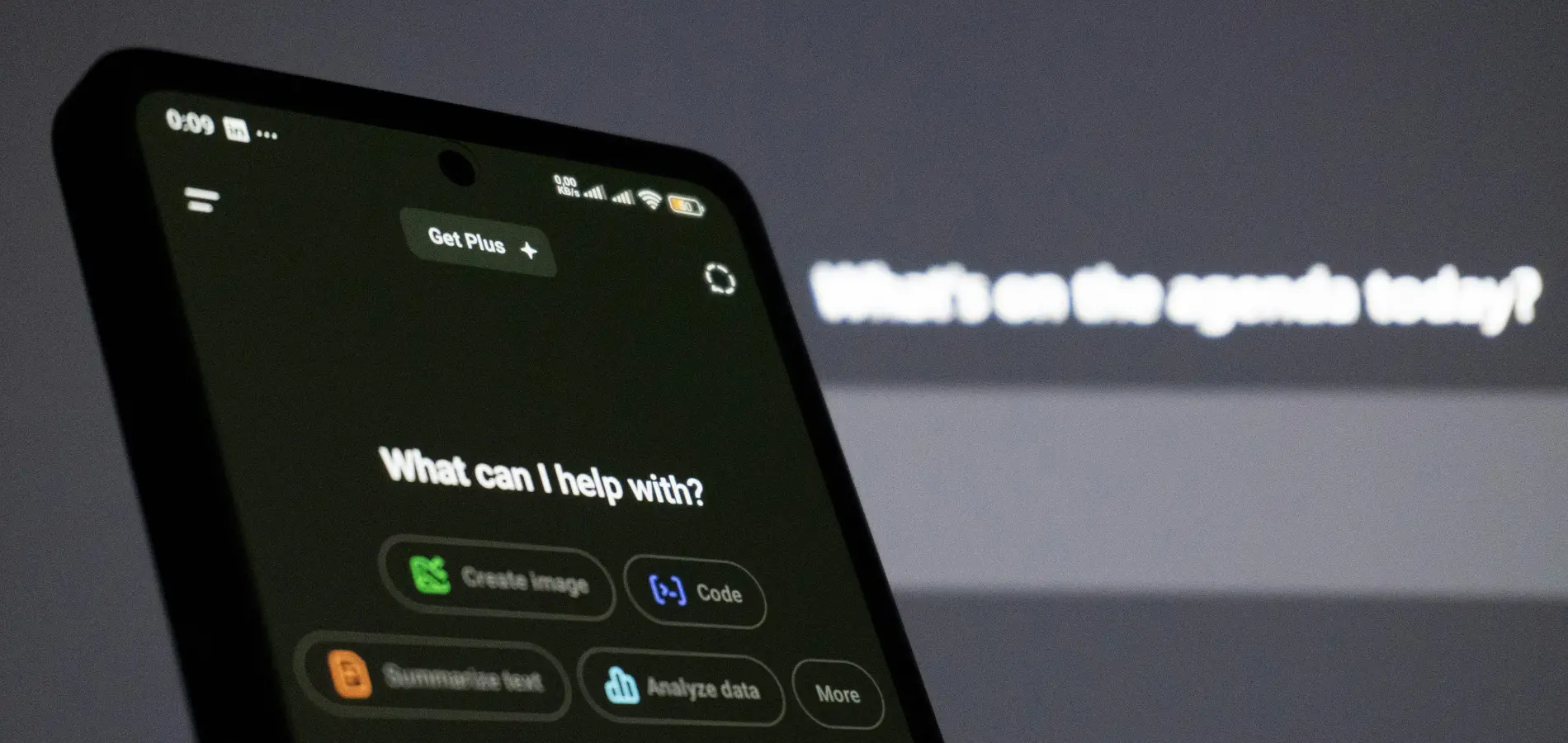
AI search engines and assistants no longer rely only on traditional rankings
Traditional SEO still matters, but it is no longer the only factor. AI systems look for patterns. They try to understand which sources are trustworthy, which brands appear consistently across different channels, and which pages provide a clear, useful, and well-structured answer. If your website has rankings but lacks enough external signals and strong topical pages, your chances of being mentioned decrease.
Visibility in Google does not guarantee visibility in AI
Many businesses make the same mistake. They assume that if they are on the first page for some of their keywords, they are already well prepared for AI visibility as well. In practice, that is not always the case. AI answers often combine different sources. They do not look only at who ranks high in the SERP, but at who appears to be the most reliable answer to a specific question.
When your brand is missing, you lose trust, traffic, and searches
If AI answers point to competitors, media outlets, directories, or other sources instead of you, users begin building trust in them. This affects branded searches, clicks, and the way your business is perceived within the niche. Missing from AI is not only missed visibility. It is missed positioning.
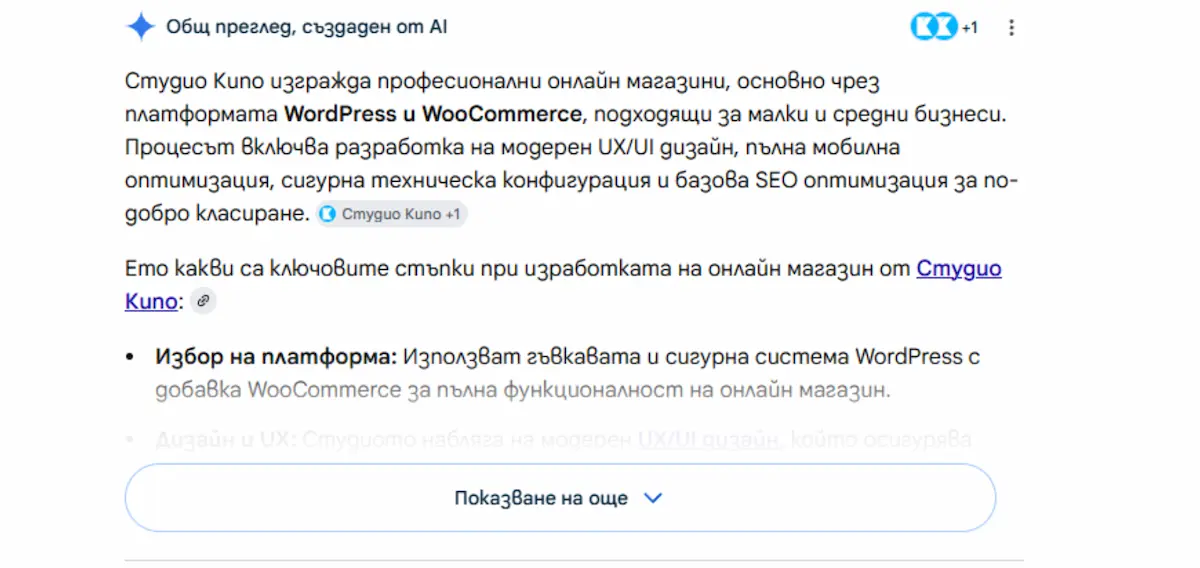
How AI systems decide whether to show your brand
There is no single button that turns on your presence in AI. There is a group of signals that work together.
Signals of consistency and credibility
When your brand name, services, descriptions, and core company details are synchronized everywhere, that creates a stable foundation. AI systems look for exactly this kind of consistency. It reduces doubt and makes it easier to connect the brand to a specific topic or service.
Citations on authoritative websites, media outlets, and directories
If your brand is mentioned in quality sources, that helps. This is not about random links. It is about context. When your brand appears in relevant articles, catalogs, local profiles, partner pages, or interviews, niche trust starts to build.
Content that can be easily extracted, summarized, and cited
AI systems prefer clear answers. Well-structured sections. Short explanations. Practical steps. Comparisons. Definitions. Pages that do not hide the main point behind vague language.
Behavioral and brand signals from real users
When people search for your name, open your website, mention your business, leave reviews, and return to you as a source, that also matters. These are indirect signals that the brand is recognized and carries weight within the topic.
How to check whether the problem is on your website or outside it
Before you start writing new content or thinking about PR, you need to understand exactly where the weak point is.
Check branded searches and AI answers for your key topics
Start with questions your potential clients would ask. Check which sources AI systems point to. See whether your brand, website, media mention, or profile appears. If nothing appears, you likely have a broader authority problem. If only external profiles appear but not your website, the issue may be in your content and structure.
Audit your Google Business Profile, directories, and listings
For local businesses, this is fundamental. If the profile is not well filled out, has few reviews, and lacks categories, images, descriptions, and updated details, you lose valuable signals. The same applies to business directories and mapping outside Google.
Review mentions, citations, and references on third-party websites
Look at where your brand appears and how it is presented. Are there old descriptions. Are there mistakes. Are there authoritative publications. Are there mentions without a link. Is there enough external context around the business at all.
Audit the main pages that should clearly explain who you are and what you do
Homepage, service pages, team page, contact page, Frequently Asked Questions, expert articles. If these pages are weak, unclear, or too generic, AI systems will struggle to extract a clear picture of your brand. At Studio Kipo, we often see exactly this. The website may look good visually, but the key pages do not say clearly enough what makes the business different.
What to improve first if you want your brand to appear more often in AI
After the audit, it is time to put things in order. Do not start with chaotic publishing of new articles. Start with the foundation.
- Standardize your business information everywhere online
- Create pages with a clear expert focus
- Publish content that answers specific questions
- Build authority through media, partnerships, and topical mentions
- Add clear structure, authorship, and proof of experience
- What type of content helps most with AI visibility
Not every page has the same chance of being used as a source. There are formats that perform better.
Lifehack
What to do over the next 30 days
The topic may seem big, but it can be organized into a clear plan.
Week 1: audit your brand signals. Check how you appear in Google, in AI answers, in directories, in media, and across social profiles. Gather all inconsistencies and missing elements in one place.
Week 2: fix inconsistencies. Correct business details, descriptions, profiles, listings, old pages, and core company signals. This is the foundation you will build on.
Week 3: publish 2 to 3 strong expert resources. Choose topics your clients genuinely ask about. Write useful, well-structured materials with a clear point of view and practical value.
Week 4: work on external mentions and authoritative sources. Plan where and how your brand should appear outside your website. This may include business profiles, topical publications, interviews, partner pages, and media materials.
Mistakes that hold your brand back in AI results
Sometimes businesses make an effort, but in the wrong direction. That wastes time and does not bring results.
- Mass AI content without editing and without original value. Publishing a large volume of text without real editing and without expert contribution creates noise. This type of content rarely builds trust. Worse, it can sometimes weaken the image of the brand itself.
- Overly generic pages without clear positioning. When every paragraph sounds like it could appear on any competitor’s website, there is no reason for AI systems to choose you. You need specificity.
- Weak presence outside the website. Even the best website will struggle to build full authority on its own. External signals matter. Without them, the brand often remains trapped inside its own domain.
- Inconsistencies between the website, social profiles, and external listings. This is often underestimated. For users it may seem minor. For algorithms, it is a signal of inconsistency.
- Lack of real trust signals. No reviews, no visible experts, no clear company identity, no proof of experience. In that case, the website appears as an anonymous source, and that rarely helps.
How to measure whether you are making progress
Work on AI visibility needs to be tracked. Otherwise, you are left only with a feeling.
More frequent brand mentions in AI answers
Check your main topics regularly and see whether you are already appearing as a source, as a mention, or through pages from your website.
Growth in branded searches
When more people search for your company name, your service together with your brand name, or the experts on your team, that is a good sign.
More citations and quality mentions
Track whether your brand starts appearing on higher-quality websites and whether those mentions relate to the topics you want to be recognized for.
Stronger organic traffic to your expert pages
If your articles, guides, and service pages start gaining more visibility and engagement, that is a sign the foundation is improving.
If you feel your brand is staying out of AI answers, the problem is rarely just one article or one page. More often, what is missing is an overall structure of signals, content, and external presence. At Studio Kipo, we look at this as a combination of SEO, brand positioning, content, and authority. When these elements work together, the chance of your business appearing more often and more meaningfully in AI environments becomes much stronger. Request a quote or contact us if you want us to see exactly where you are losing visibility and what to fix first.
Share


FAQ:
What is the difference between SEO, AEO, and GEO?

Can a small business also appear in AI answers?
Yes. You do not need to be a large brand. You need clear positioning, strong descriptions, and enough trustworthy information around a specific topic or service.
How long does it take to build stronger AI authority?
It depends on the market, the competition, and your current position. For some businesses, the first signals appear after a basic audit and cleanup. For others, longer work is needed across content, PR, and external presence.
Why does my brand rank in Google but not appear in AI?
Because AI systems do not look only at rankings. They also assess authority, content structure, external signals, and the consistency of your brand information.
Is good SEO alone enough?
No. SEO is the foundation, but AI visibility also requires brand signals, external mentions, trust, and content that answers user questions clearly.
Does Google Business Profile help with better AI visibility?
Yes, especially for local businesses. A complete and active Google Business Profile sends a clear signal of a real business, up-to-date information, reviews, and a connection to a specific service and location.
About the author

Niki is the CEO & Founder of Studio Kipo. He combines business strategy, product thinking, design, and SEO to advise both clients and team members. He leads multidisciplinary teams and complex projects, skillfully contributing with design ideas, code, and practical solutions.
Related articles
How to Prepare Your Online Store for Sales Through ChatGPT and Google AI
The way people search for products online is changing. Instead of browsing multiple websites and product pages, users increasingly describe what they are looking for directly to ChatGPT, Gemini, and other AI systems.
For online stores, this creates a new requirement. Product information needs to be clear not only to visitors and search engines, but also to AI systems that find, ...

Teo
Aug 17
·
14 minute reading
Artificial Intelligence in Web Design in 2026: Opportunities, Limitations, and the Role of the Designer
Write a few sentences and AI will suggest a homepage structure, color palette, images, copy, and a working prototype. A process that once took days now starts within minutes.
This might sound like the end of traditional web design. In practice, something different is happening. The designer's role is not disappearing. It is shifting from repetitive execution towards analysis, ...

Petya
Aug 10
·
18 minute reading
GEO Optimization, AEO, and AI SEO: What’s the Difference, and Why Are They Important for Businesses in 2026?
The way people search for information is no longer limited to a list of ten Google results. More users now ask complete questions and expect a ready answer, comparison, recommendation, or specific steps. Such an answer might appear in Google AI Overviews, ChatGPT, Gemini, Perplexity, or another artificial intelligence system.
For businesses, this shift is significant. Your website now ...
Niki
Aug 2
·
14 minute reading