GEO means that the website is optimized to be more easily recognizable, understandable, and usable as a source in generative AI environments. This includes clear pages, well-structured content, trust signals, and a solid technical foundation.


Table of contents
GEO is becoming an increasingly important topic, but there is already a lot of hype surrounding it. Some businesses hear that AI search is changing the rules and immediately start looking for new techniques. That’s the wrong approach. GEO doesn’t start with tricks. It starts with a clear, well-structured company website that can be easily understood by both people and the systems that aggregate, extract, and recommend information. If you want GEO to work for your business, you first need to get the foundation right.
What is GEO and why does it already matter for your company website
GEO stands for Generative Engine Optimization. Simply put, it is the way you prepare your website’s content and structure so that you become a more recognizable and useful source in environments where AI systems summarize information and provide direct answers.
Until recently, the main question was how to get a website to rank on Google. Today, the question is also how the website can be used as a source for AI-generated answers, summaries, and recommendations. This is a significant shift. It is no longer enough to simply have a page on a given topic. It must be clear what you are saying, why you are saying it, who is behind the information, and why it is trustworthy.
This is important for a company website. If your services, expertise, and processes are not well explained, AI systems will have a hard time recognizing you as a reliable source. But if your site has clear, specific, and well-organized information, your chances of appearing in the new search environment increase.
GEO is not separate from SEO, but rather the next step built on a solid foundation
One of the most common mistakes is viewing GEO as something completely separate from SEO optimization. This is not true. If a company’s website lacks a solid technical foundation, clear pages, meaningful content, and a sound internal structure, GEO has nothing to build upon.
SEO optimization remains the foundation. Indexing, crawlability, speed, mobile version, good heading hierarchy, clear URLs, and high-quality content remain important. GEO simply builds on this foundation. It adds another layer. Not only should the site be found, but it should also be understood, cited, and used as a reliable source.
That’s exactly why the right approach isn’t to replace SEO with GEO, but to structure your website so that it performs well in both areas.
First, review your website’s content
The best way to start with GEO isn’t a new tool or a new plugin. It starts with a simple question. Is it clear what your company does within the first few seconds?
On many company websites, this isn’t clear enough. There are generic phrases, grandiose promises, and visually appealing sections, but it’s not clear what you actually offer, who you offer it to, and what the benefit is. If this isn’t clear to a person, it won’t be clear to the systems that analyze the content either.
Check a few things. Is it easy to find information about your core services and the type of clients you work with? What sets you apart? Is there easy access to the most important pages? If the answer is no, that’s exactly where you need to start.
GEO starts with clarity. Not with volume, but with clarity.
Start with the pages that inspire the most trust
Not all pages on a company website carry the same weight. There are several types of pages that build the most trust and should be prioritized.
These are typically the homepage, service pages, the "About Us" page, the contact page, and any pages that showcase real-world examples, workflows, or expert insights. This is exactly where AI systems and users look for answers to the most important questions. Who is behind this website? What does the company do? Is this expertise real? Is there a reason to trust it?
If these pages are weak, generic, or unclear, your SEO efforts will remain superficial. However, if they are specific, well-written, and well-linked to one another, the site begins to look like a real source of knowledge, not just a brochure.
Structure your content to answer real questions
One of the most useful steps is to change the way you think about content. Instead of writing only general pages about services, start thinking in terms of real questions that customers ask.
- How the service works.
- Who it’s suitable for.
- When it makes sense.
- What the risks are.
- How the project unfolds.
- What determines the price.
- What are the most common mistakes.
These are topics that make a company website more useful, more shareable, and easier to understand.
In practice, this means using clear subheadings, direct answers, FAQ sections, and separate articles addressing specific questions. This makes the content easier to scan, more useful for the reader, and better structured for AI systems.
The fewer general phrases you use and the more specifics you provide, the stronger your site becomes in terms of GEO optimization.
Life Hack
Open the homepage of your company’s website and show it to someone who doesn’t know your business. Give them 10 seconds, then ask them what the company does, who its target audience is, and what the main service or product offered is. If they can’t answer clearly, your GEO problem isn’t with AI, but with a lack of sufficient clarity at the website level.
Build thematic depth, not just a general presence
Many company websites have a single “Services” page, and that’s it. This is rarely enough. If you want GEO to work, you need to build thematic depth.
This means separate pages for your main services, separate texts on important subtopics, and articles that explore issues of interest to your potential customers. This way, the site doesn’t look generic and superficial, but rather like a resource that truly covers the topic.
For example, if you offer renovation services, a single general page isn’t enough. Separate topics such as bathroom renovation, kitchen remodeling, kitchen faucet replacement, and other specific services are also useful.
Thematic depth is one of the strongest signals that the site understands the topic, rather than simply wanting to be present on it.
Demonstrate expertise, experience, and context
Company websites talk about expertise, but they don’t demonstrate it well enough. GEO requires more than that. It’s not enough to just say you understand a given topic; you need to demonstrate it through specific explanations, processes, examples, and real-world context.
This can be achieved in various ways. Through well-written articles. Through real-world examples. Through explaining how you approach projects. Through a clear presentation of the team and their roles. Through specific service pages that don’t sound like generic advertising, but rather like a genuine expert framework.
When a website conveys a sense of real-world experience, it becomes more convincing to both users and the AI systems that evaluate the content as a source.
Don’t underestimate the technical foundation
GEO isn’t just about content. If the site is technically unprepared, this limits both its comprehensibility and its visibility. That is why the technical foundation remains essential.
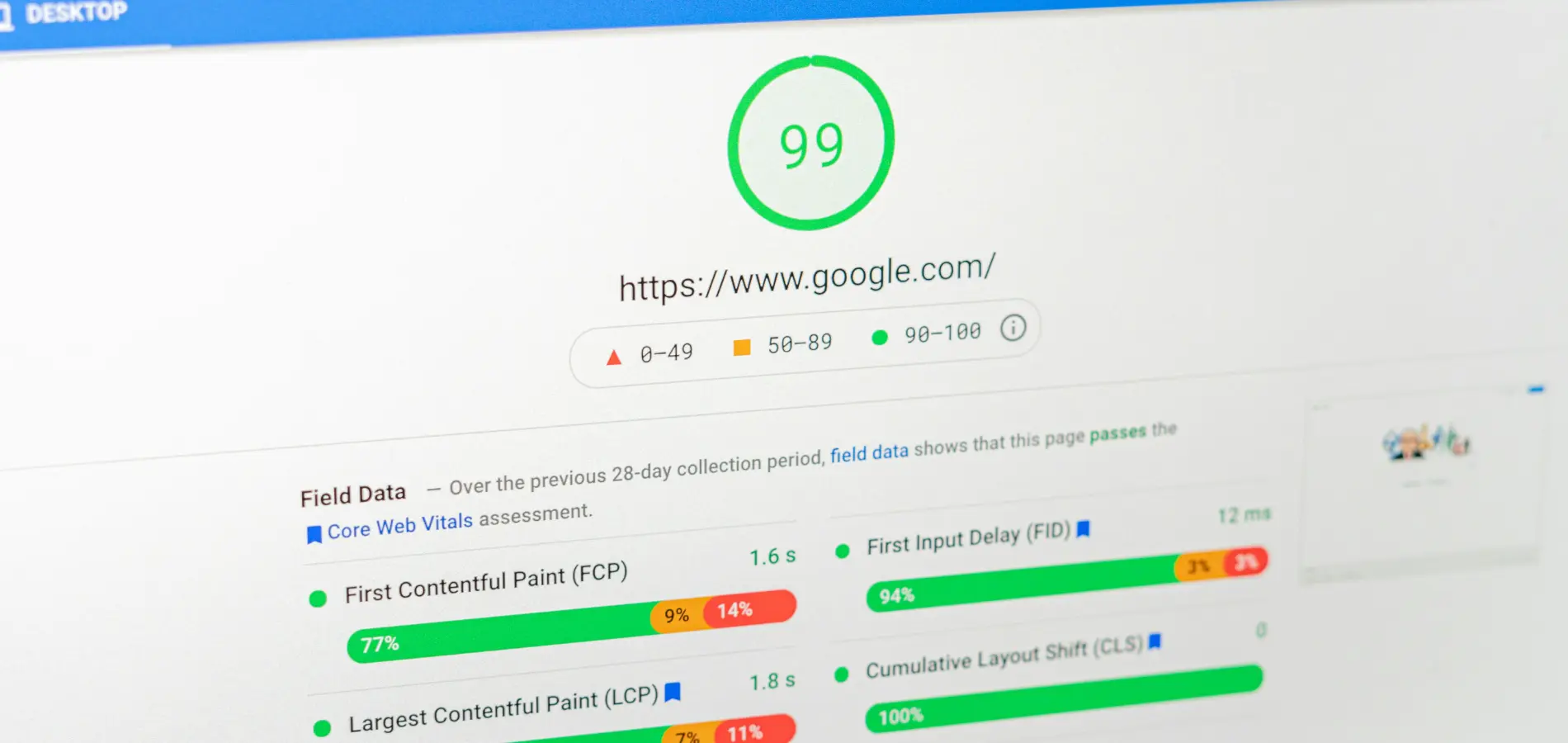
Check whether important pages can be crawled and indexed normally. Check the structure of the headings, internal linking, mobile version, and speed. Check that the site has no duplicate pages or pages that contain no links to other pages. Also consider structured data where applicable.
A company website shouldn’t just have good content. It must be organized so that this content is accessible, logical, and easy to understand.
What to add first if you’re starting GEO from scratch
If you’re just getting started, don’t try to do everything at once. It’s better to get a few key things in order first.
First, clean up the homepage and make it clear what the company does. Then organize the main services into separate pages. Next, add FAQ sections to the most important pages. Next, create a few strong articles addressing real customer questions. Then improve the internal links between services and content. Finally, clearly show who is behind the site and what your actual experience is.
This is a better start than trying to create an abstract GEO strategy without a clear foundation.
The Most Common GEO Mistakes for a Business Website
- The most common mistake is for a business to start thinking about GEO without its website having a solid SEO foundation.
- The second mistake is publishing the same general content that sounds good but doesn’t say anything specific.
- The third is the lack of clear service pages.
- The fourth is the absence of real expert signals.
- The fifth is the excessive use of modern terms without sufficient clarity.
These mistakes make the site noisier, but not more useful. And GEO doesn’t work well with noise. It works on clarity, structure, and real value.
How to tell if GEO is heading in the right direction
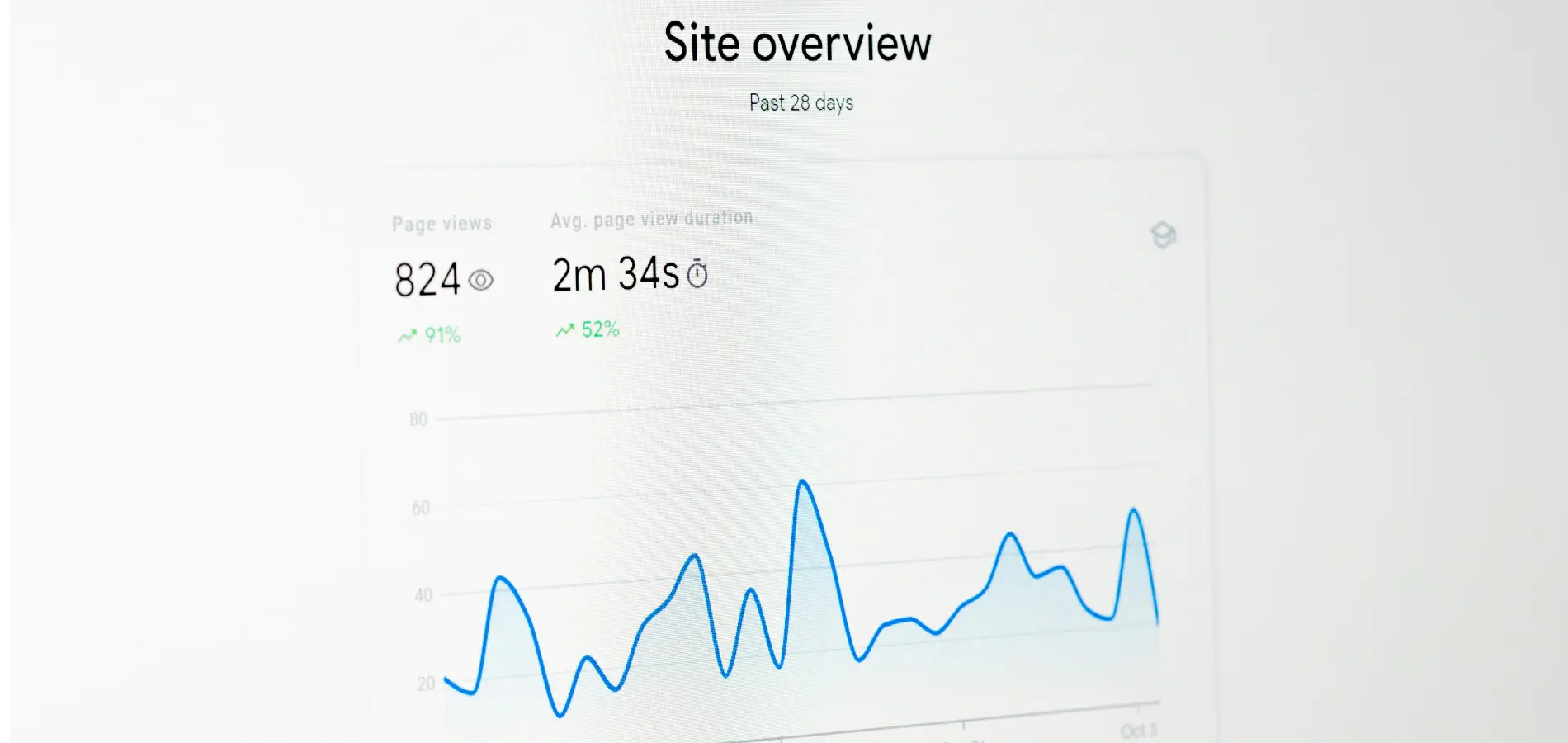
GEO isn’t measured by a single metric. It’s better to look at the bigger picture. Is your presence on important topics growing? Do you have better content on specific topics? Is organic traffic to key pages improving? Is user behavior improving? Does the site appear more organized and reliable as a source?
These are more useful indicators than trying to track a single GEO metric. You usually know you’re on the right track when your site’s metrics are improving.
GEO for a corporate website—where to start
The best starting point for GEO isn’t complex technology or a new buzzword in your strategy. It starts with a well-organized corporate website. Clear pages. Specific services. Well-structured content. Real signals of expertise. A technical foundation that doesn’t get in the way.
If you want GEO to work, start there. Make your website clearer, more specific, and more useful. This will put you in a much better position for both traditional search and the new environment, where AI systems are playing an increasingly important role.
Share


FAQ:
What does GEO mean for a corporate website?

Where should a company website start with GEO?
The best place to start is with clarity. First, it must be clear what the company does, what services it offers, who it serves, and why the information on the site is trustworthy. Then come the structure, content, and technical foundation.
Why is clear content so important for GEO?
Because both users and AI systems work better with clear, specific, and well-organized content. If the text is too general and doesn’t provide direct answers, the site is harder to understand and use as a resource.
How can I tell if my website has enough trust signals?
Check whether it’s clear who’s behind the business, if there’s a team page, if there are real contact details, if the workflow is described, and if there are examples demonstrating real-world experience. If these elements are missing, trust in the website is weaker.
What are the most common GEO mistakes for a corporate website?
The most common mistakes are overly generic content, a lack of clear service pages, the absence of expert signals, approaching GEO without a solid SEO foundation, and overusing buzzwords instead of concrete details.
Does GEO replace SEO?
No. GEO does not replace SEO; it builds upon it. SEO remains the foundation because without good indexing, structure, content, and technical health, the website cannot be strong in the GEO context.
Which pages are most important for GEO in the beginning?
The most important are the homepage, the services pages, the About Us page, the contact page, and all pages that demonstrate expertise, work processes, and a real-world business context.
Does a company website need to have a blog for GEO to work better?
In many cases, yes. A blog helps you address specific questions, subtopics, and actual user searches. This adds thematic depth and makes the site a stronger source of information.
Is the technical foundation important for GEO?
Yes, very much so. If the site has issues with indexing, internal linking, the mobile version, speed, or structure, this hinders both visibility and the understanding of the content.
How can I tell if my GEO efforts are heading in the right direction?
You’ll know it’s working because the site becomes clearer, better structured, and stronger on key topics. This often shows up in improved page performance, more useful content, a stronger thematic presence, and better overall visibility.
About the author

Teo is an SEO Team Lead with 13+ years of experience in the field and a popular speaker, with a proven track record of delivering sustainable organic growth for websites and online stores. He leads strategies and trainings with a practical focus on technical SEO, content, and SERP coverage.
Related articles
How to Prepare Your Online Store for Sales Through ChatGPT and Google AI
The way people search for products online is changing. Instead of browsing multiple websites and product pages, users increasingly describe what they are looking for directly to ChatGPT, Gemini, and other AI systems.
For online stores, this creates a new requirement. Product information needs to be clear not only to visitors and search engines, but also to AI systems that find, ...
Teo
Aug 17
·
14 minute reading
GEO Optimization, AEO, and AI SEO: What’s the Difference, and Why Are They Important for Businesses in 2026?
The way people search for information is no longer limited to a list of ten Google results. More users now ask complete questions and expect a ready answer, comparison, recommendation, or specific steps. Such an answer might appear in Google AI Overviews, ChatGPT, Gemini, Perplexity, or another artificial intelligence system.
For businesses, this shift is significant. Your website now ...

Niki
Aug 2
·
14 minute reading
Google Search Console Now Monitors Social Media
The digital world has witnessed one of the most significant and unexpected changes to web analytics tools in recent years. Google has officially launched a major new feature in Google Search Console, introducing the so-called Platform Properties. With this update, the platform now allows direct tracking and analysis of the performance of Your social media ...

Nina
Jul 13
·
7 minute reading