The article compares native and hybrid mobile applications, explains their advantages and disadvantages, provides real-world examples, and offers guidance on choosing the right solution based on business needs.


Table of contents
Direct answer: Your business's first impression often happens through its mobile app. A fast, smooth app builds trust quickly, while a slow or confusing one risks deletion. Choosing between a native or hybrid app is therefore a key strategic decision, not just a technical one.
Native apps are built for one operating system, such as Android or iOS. Hybrid apps use one codebase to run across multiple platforms.
The differences between them affect:
To make the right decision, you need to understand the pros and cons of both approaches.
The article compares native and hybrid mobile applications, explains their advantages and disadvantages, provides real-world examples, and offers guidance on choosing the right solution based on business needs.
Native apps are software designed for a specific platform, such as Android or iOS. Android apps are typically developed using Java or Kotlin, whereas iOS apps utilize Swift or Objective-C. They are distributed through Google Play and the App Store and have full access to the device's features.
Advantages of Native Mobile Apps
Disadvantages of Native Mobile Apps
Hybrid apps combine elements of both web and native technologies. They are built with HTML, CSS, and JavaScript, then embedded into a container that allows them to run on both Android and iOS. Popular frameworks for hybrid app development include Ionic, React Native, Flutter, and Apache Cordova.
Advantages of Hybrid Apps
Disadvantages of Hybrid Apps
To decide which option is right for you, look at the comparison below. The table summarizes the key strengths and weaknesses:
|
Criterion |
Native Apps |
Hybrid Apps |
|
Performance |
Maximum speed and optimization |
Lower, depends on the framework |
|
User Experience (UX/UI) |
Best, tailored to the platform |
More limited, often more generic |
|
Access to Hardware |
Full access to all device features |
Limited, some features may not be available |
|
Development Costs |
Higher, separate teams for each platform |
Lower, one codebase for all platforms |
|
Development Time |
Longer, separate work for Android and iOS |
Shorter, thanks to a single codebase |
|
Maintenance & Updates |
More complex and costly |
Easier and cheaper |
|
Best Suited For |
Games, high-graphics apps, complex business solutions |
Simpler apps, MVPs, startups |
The decision between native and hybrid depends on your goals, budget, and expectations. There's no universal answer, so align your choice with your business needs.
Real-World Examples
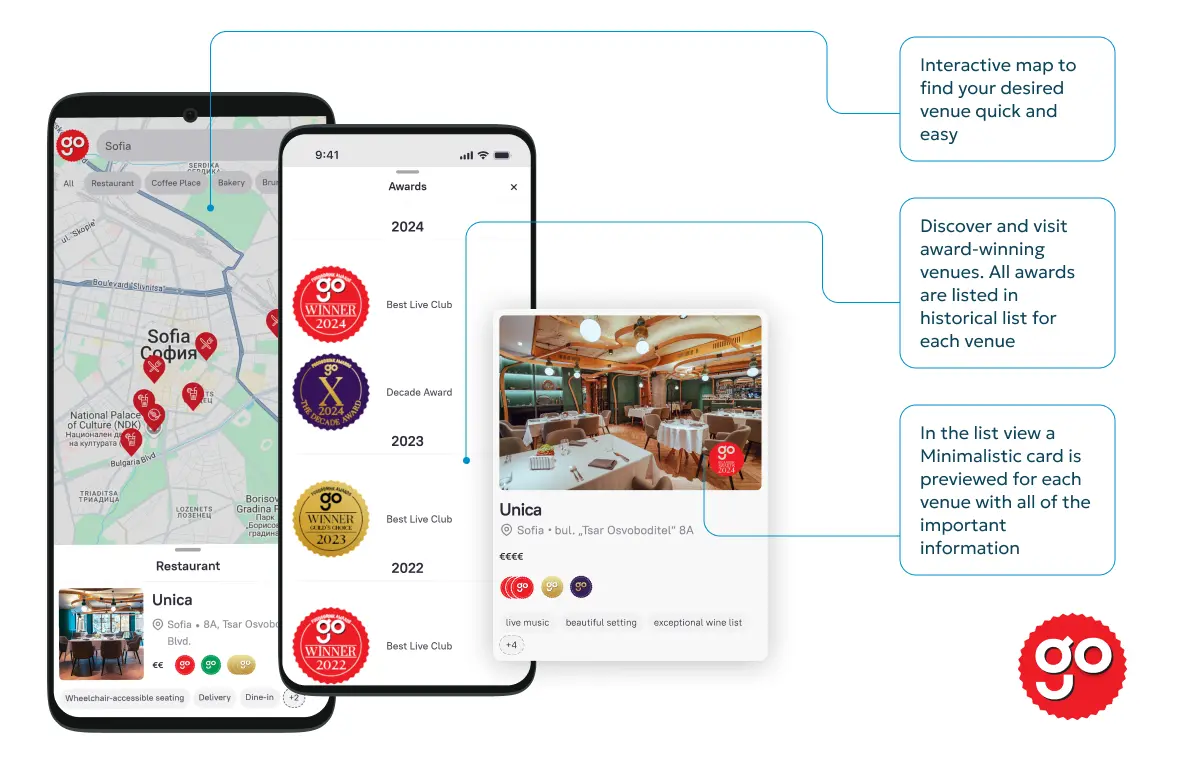
Banks and healthcare providers usually go native because performance and security are non-negotiable. Startups and small businesses often choose hybrid, saving time and money while testing their ideas.
Banks and healthcare apps almost always rely on native development because speed and security cannot be compromised. Startups and small businesses often go hybrid to save time, reduce costs, and enter the market faster. More and more companies are blending the two approaches - starting with a hybrid app to validate the concept, then investing in a native version once the product gains traction and user demand grows.
Share


Native apps are built for a specific platform (Android or iOS) and deliver better performance. Hybrid apps use a single codebase across platforms and are more cost-efficient.
No. Hybrid apps work well for simpler tasks like catalogs, forms, or news apps. But for games, complex visuals, or heavy graphics, native apps will always deliver faster performance and smoother experiences.
For small businesses, hybrid apps are often the smarter choice because they require less time and money to launch.
Hybrid apps are cheaper because the same code works for both Android and iOS. Native apps require separate teams and codebases for each platform, making them more expensive.

Niki is the CEO & Founder of Studio Kipo. He combines business strategy, product thinking, design, and SEO to advise both clients and team members. He leads multidisciplinary teams and complex projects, skillfully contributing with design ideas, code, and practical solutions.